Search engine optimization is evolving rapidly in 2026, and schema markup has moved from a technical enhancement to a core requirement for visibility. With AI driven search experiences, entity based indexing, and rich result dominated SERPs, structured data is no longer optional. It is a strategic necessity.
Businesses that ignore schema markup risk losing visibility in an increasingly competitive and AI interpreted search environment. Those that implement it correctly gain clarity, authority, and higher engagement in search results.
What Schema Markup Is
Schema markup is structured data that helps search engines understand the meaning behind your content. Instead of relying only on keywords and contextual clues, search engines use schema to identify specific entities such as products, organizations, events, reviews, articles, and FAQs.
Schema vocabulary is standardized at Schema.org, a collaborative project supported by major search engines including Google, Microsoft, and Yahoo. Most modern implementations use JSON LD format, which keeps the structured data separate from visible page content and easier for search engines to process.
By explicitly defining what your content represents, you remove ambiguity and improve machine interpretation.
The Search Landscape in 2026
Search engines have transitioned from keyword matching systems to AI powered answer engines. Features such as AI generated summaries, rich results, voice responses, and knowledge panels depend heavily on structured data.
When search engines generate:
- Featured snippets
- AI overviews
- Knowledge panels
- Product rich results
- FAQ dropdowns
They rely on structured signals to determine accuracy and relevance. Schema markup provides those signals.
Without structured data, your content may still rank, but it becomes less likely to be selected for enhanced presentation formats.
Schema Markup and Rich Results
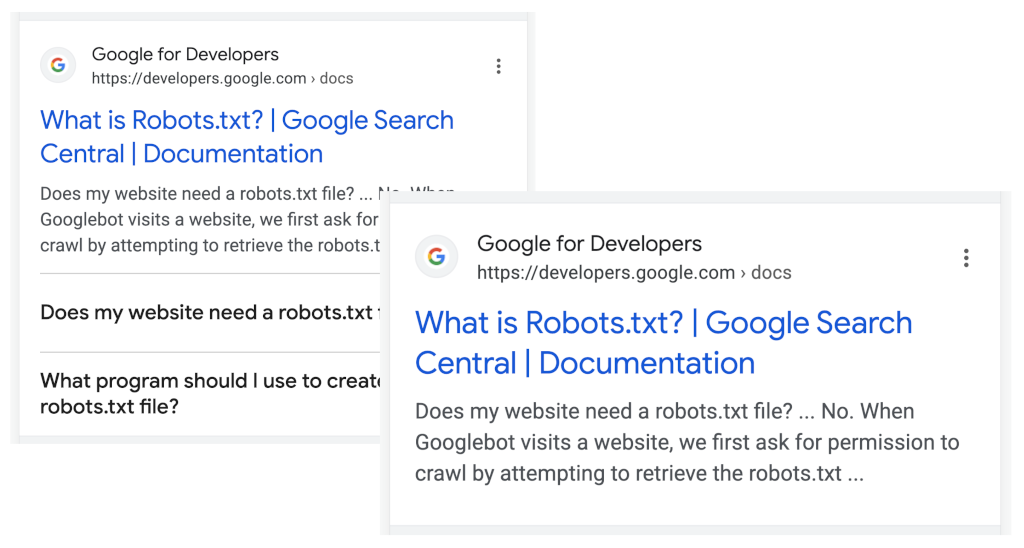
Rich results visually enhance standard search listings. Examples include:
- Star ratings for reviews
- Product pricing and availability
- Event dates and ticket details
- Expandable FAQ sections
- Recipe preparation times
Studies across multiple SEO platforms consistently show that rich results can significantly increase click through rates. When a listing includes ratings, images, or structured enhancements, users are more likely to engage with it compared to plain text listings.
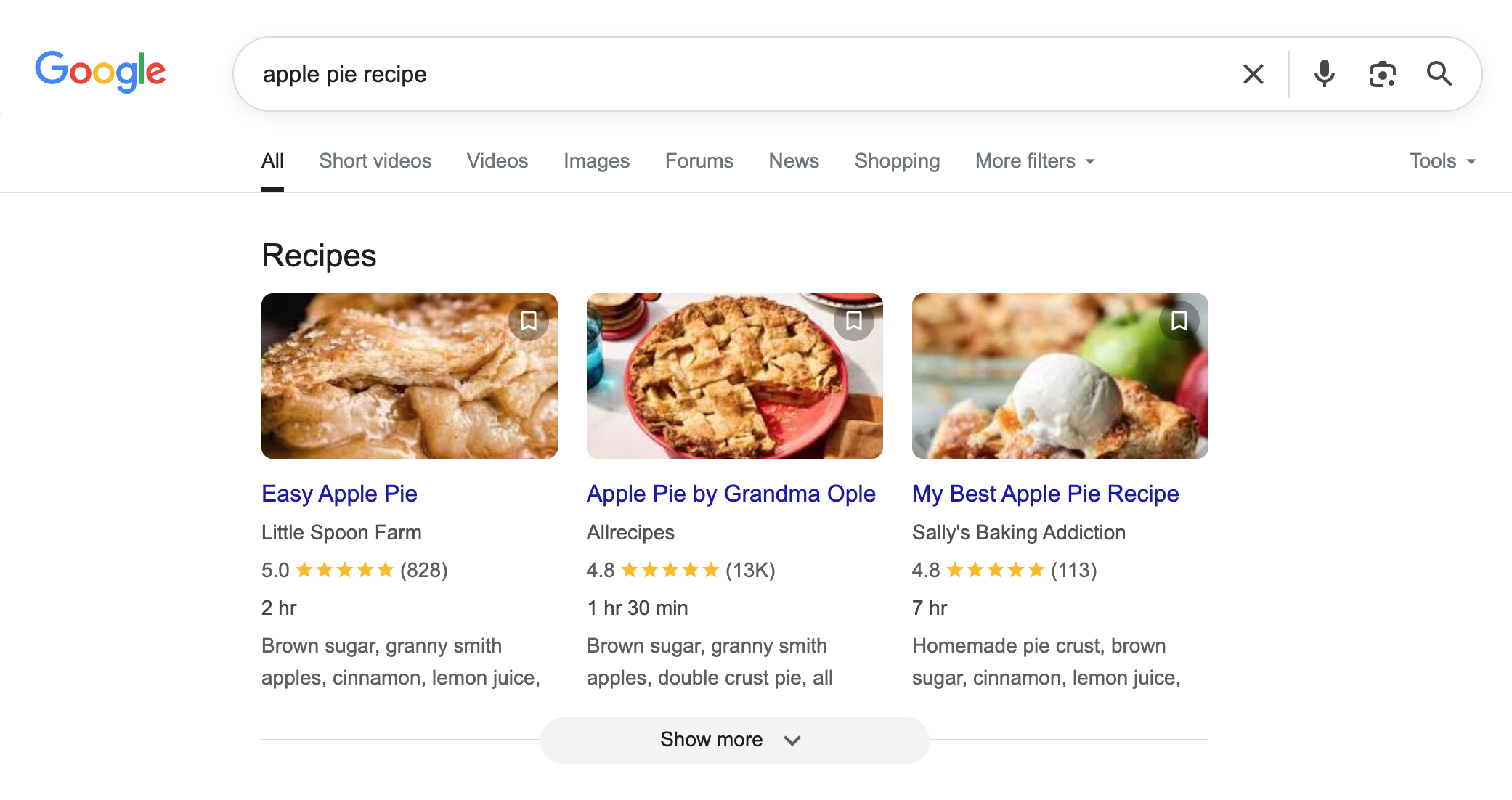
Even if schema does not directly boost rankings, improved CTR sends positive engagement signals that contribute to long term performance.
Entity Based SEO and Schema
Modern search engines organize information around entities rather than isolated keywords. An entity is a clearly defined person, place, organization, or concept.
Schema markup helps define these entities explicitly. For example:
- Identifying an author as a person with credentials
- Defining a business as a local entity with address and phone number
- Marking a product with price, availability, and reviews
This structured clarity strengthens semantic understanding and improves your eligibility for knowledge panels and AI summaries.
As AI systems build relationships across knowledge graphs, schema markup becomes a foundational element of entity driven SEO.
Voice Search and Conversational Interfaces
Voice search and AI assistants rely heavily on structured data. Devices powered by assistants such as Google Assistant and Siri extract concise answers from clearly structured information.
When content includes FAQ schema, HowTo schema, or properly structured definitions, it becomes more suitable for voice responses.
In 2026, optimizing only for traditional desktop search ignores a large portion of user behavior. Schema ensures your content is compatible across voice, mobile, and AI driven interfaces.
Schema Is Not a Direct Ranking Factor but It Drives Results
Google has stated that structured data itself is not a direct ranking factor. However, this statement can be misleading if interpreted narrowly.
Schema improves:
- Click through rate
- User trust and credibility
- Eligibility for enhanced features
- Content clarity for AI extraction
All of these indirectly influence performance. Better engagement metrics strengthen overall SEO outcomes.
In competitive niches, even small improvements in CTR can produce substantial traffic gains.
Types of Schema That Matter Most in 2026
Not all schema types deliver equal value. The most impactful structured data types include:
- Article and BlogPosting for content publishers
- Product and Offer for ecommerce
- Review and AggregateRating for trust building
- FAQPage and HowTo for informational queries
- LocalBusiness for geographic targeting
- Organization for brand authority
Selecting schema that aligns with your business model ensures relevance and effectiveness.
Implementation Best Practices
To maximize the benefits of schema markup in 2026, follow these guidelines:
Use JSON LD format. It is cleaner, easier to manage, and recommended by Google.
Ensure accuracy. The information in your structured data must match visible page content.
Validate regularly. Use Google Rich Results Test and Search Console to detect errors.
Keep it updated. Outdated pricing, discontinued products, or incorrect business details can weaken trust signals.
Avoid spammy markup. Only apply schema that genuinely reflects your content.
Competitive Advantage Through Early Adoption
Despite its benefits, many websites still fail to implement structured data correctly. This creates opportunity.
Websites that integrate comprehensive schema across content types gain:
- Greater visibility in enhanced SERP features
- Higher engagement rates
- Stronger entity recognition
- Better alignment with AI generated search experiences
In an era where AI systems increasingly synthesize and summarize information, structured clarity becomes a competitive differentiator.
Final Thoughts
Schema markup is no longer a technical afterthought. It is a strategic SEO asset that strengthens how search engines interpret, display, and prioritize content.
In 2026, success in search depends on clarity, authority, and machine readability. Structured data delivers all three.
As search engines continue shifting toward AI driven summaries, entity recognition, and conversational results, schema markup stands at the center of sustainable SEO strategy.
Businesses that embrace structured data will not only improve their visibility but also future proof their search presence in an increasingly intelligent digital ecosystem.