Search behavior is changing.
For years, the process was predictable. Users entered a query, reviewed a list of links, visited multiple pages, and gradually found the information they needed.
Today, that experience is evolving.
Users now receive direct, structured answers without necessarily visiting a website. AI-powered systems interpret queries, synthesize information, and present responses instantly.
This shift raises an important question:
Is AI search replacing SEO?
The answer is not straightforward. SEO is not being replaced, but it is being redefined. A new layer has emerged, one that requires content to be not only discoverable but also understandable and usable by AI systems. This is where Generative Engine Optimization comes into play.
The Shift from Search to Answer Delivery
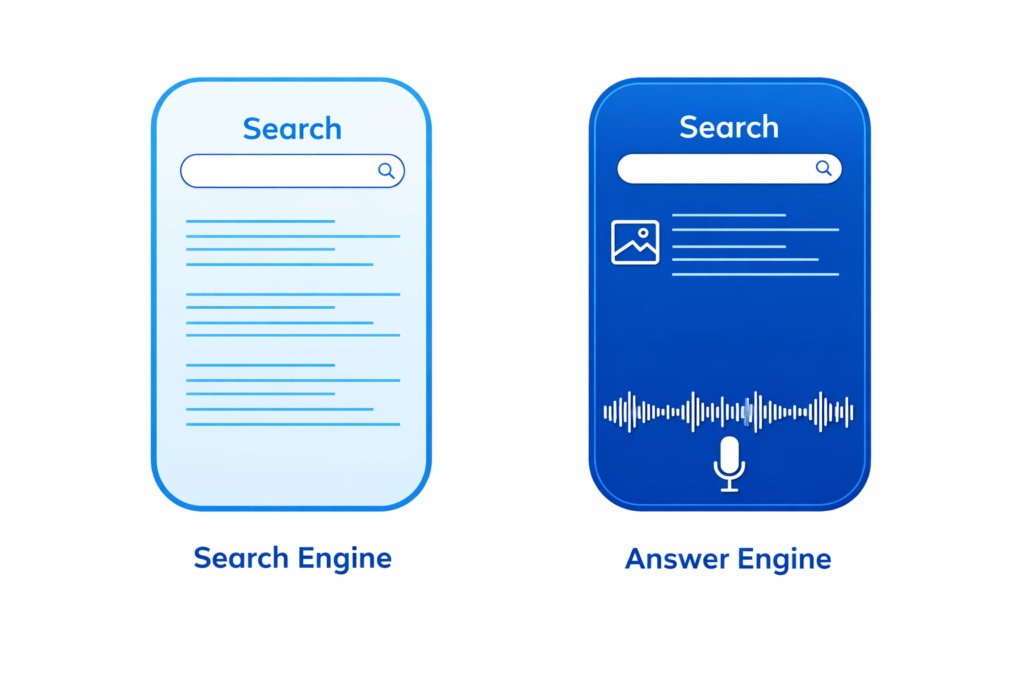
Traditional search engines were designed to help users locate information.
AI-driven platforms are designed to deliver it.
This distinction is critical.
Previously, users played an active role in evaluating multiple sources. Now, AI systems perform that function by aggregating and summarizing content from across the web.
As a result, the user journey has shortened significantly. In many cases, the need to click through to individual websites has decreased.
This transformation is influencing how content is created, optimized, and measured.
The Evolving Role of SEO
SEO remains essential, but its scope is expanding.
Historically, SEO focused on improving rankings within search engine results pages. Success was measured through metrics such as organic traffic, click-through rates, and keyword positions.
In the current landscape, content must also meet a new requirement. It must be interpretable and reliable enough to be used by AI systems.
The focus is shifting from simply ranking higher to becoming a trusted source of information.
This represents a fundamental evolution in how visibility is achieved.
Understanding Generative Engine Optimization
Generative Engine Optimization, or GEO, is an emerging approach that reflects this shift.
GEO involves structuring and presenting content in a way that enables AI systems to:
- Accurately interpret meaning
- Extract key insights
- Evaluate credibility
- Incorporate information into generated responses
While SEO ensures that content is discoverable, GEO ensures that it is usable.
Both approaches are interconnected and increasingly necessary for effective digital visibility.
Key Differences Between SEO and GEO
Although SEO and GEO share common goals, their priorities differ.
SEO traditionally emphasizes:
- Keyword optimization
- Backlink acquisition
- Technical performance
- Ranking improvements
- Traffic generation
GEO emphasizes:
- Clarity and precision
- Context and semantic meaning
- Structured formatting
- Topical authority
- Trustworthiness
This shift does not eliminate the importance of traditional SEO practices. Instead, it builds upon them.
Content must now perform well in both dimensions.
Redefining Performance Metrics
AI-driven search is also changing how success is evaluated.
Previously, performance was closely tied to website traffic and engagement metrics.
Now, users often obtain answers without visiting a site. This introduces a different dynamic.
Content can influence outcomes without generating a direct visit.
As a result, organizations must consider additional indicators of success, such as:
- Inclusion in AI-generated responses
- Brand visibility within answers
- Perceived authority in a subject area
Traffic remains important, but it is no longer the sole measure of impact.
Characteristics of High-Performing Content
Certain content qualities are consistently favored in AI-driven environments.
Clarity and directness
Content should address queries clearly and efficiently. Ambiguity and unnecessary complexity reduce usability.
Structured presentation
Well-organized content improves comprehension. Headings, bullet points, and concise paragraphs make information easier to process.
Depth and expertise
Comprehensive coverage of a topic signals authority. Isolated or surface-level content is less likely to be referenced.
Natural tone
Clear, human language enhances readability and trust. Overly technical or rigid writing can reduce accessibility.
Original contribution
Unique insights and perspectives add value. Repetition of widely available information is less effective.
Strategic Implications
The rise of AI search presents both challenges and opportunities.
Organizations that adapt can position themselves as authoritative sources within their domain. Rather than competing solely for clicks, they can compete for credibility and influence.
Over time, this can strengthen brand recognition and trust.
The emphasis is shifting toward long-term value rather than short-term traffic gains.
Adapting Your Content Strategy
Transitioning to this new environment does not require abandoning established practices. Instead, it involves expanding and refining them.
Align content with user intent
Focus on addressing specific questions and problems. AI systems are designed to respond to intent-driven queries.
Deliver value immediately
Provide clear answers early in the content. This improves both user experience and AI usability.
Simplify communication
Ensure that complex ideas are explained clearly without sacrificing accuracy.
Maintain technical foundations
Continue to apply SEO best practices, including site structure, keyword research, and performance optimization.
Prioritize usefulness and credibility
Content that consistently delivers accurate and helpful information is more likely to be trusted and referenced.
Is AI Search Replacing SEO
AI search is not replacing SEO. It is expanding its scope.
Visibility now extends beyond search rankings into AI-generated responses. Content must be both discoverable and interpretable.
This shift requires a broader approach to optimization, one that integrates both SEO and GEO principles.
Final Perspective
The transition toward AI-driven search reflects a larger transformation in how information is accessed and consumed.
Content is no longer evaluated solely on its ability to rank. It is evaluated on its ability to inform, clarify, and contribute to answers.
Organizations that focus on clarity, depth, and trust will be better positioned in this evolving landscape.
The future of search will not be defined by rankings alone, but by the quality and reliability of information delivered to users.